









REAL PEOPLE, REAL CHANGE
Lisa
My anxiety was consuming my life. I couldn’t enjoy holidays as I would be worried about returning to work. Weekends were the same, I would start worrying from Saturday evening. My brain felt like it would explode with all the thoughts going on.
During The Little School of Big Change, I began to understand that I needed to let my thoughts carry on but not take them seriously. I can’t stop them but I don’t need to act on them either. The course also gave me the freedom to do whatever I wanted in life. It doesn’t matter if I make mistakes or have bad days. I don’t have to dwell on them, I can just move on. It’s given me freedom and helped me to relax. I know I’m on the right track.
Allan
I had what I thought was a sort of free-floating anxiety. An on-off fear and insecurity of what seemed like everything. I would suddenly fly into rages and break things. Or I felt that I generally just lacked confidence in most things.
Since working with Amy and The Little School of Big Change, anger and frustration is more or less non-existent. The constant worry and fear of whether I can do something just isn’t there. Things just happen. Occasionally I get caught in thought. We all do, don’t we? It soon fizzles out though.
Pamela
I was anxious and worried about daily life. The pandemic made this much worse. I worried about my family members’ health excessively. I had OCD habits related to my anxiety.
I feel more calm and peaceful on a daily basis. The Little School of Big Change has helped me feel so much better about who I am as a person…I don’t feel shame or guilt about things that weren’t my fault to begin with.
Samantha
“Before The Little School of Big Change, I was so caught up in the cycle of my chronic illness. I over-thought situations and interactions. I truly believed that external factors determined my feelings.
After finding Amy and her school, I feel a sense of lightness and realize my own thinking was responsible for my feelings. I was no longer scared of my feelings as I knew they would pass. I no longer find myself scrambling when a problem arises and I’m more aware of my wisdom.”
Dido
“Before The Little School of Big Change, I struggled with eating disorders. All of them! They had run my life for more than 10 years and as a result, I lacked any peace in myself and any form of self esteem. I felt like I was always going to want to be someone else. Living felt too hard.
After coming across Amy, I instantly felt that there was something different, some possibility that life could be better. After feeling like I’d tried everything and spent years of my life trying to work out how to fix myself, there was hope. Then I joined The Little School of Big Change and gained so much from it, way more than just help with eating disorders. Slowly, I’ve left behind old habits and everyday I see more about beliefs, what is really going on, and how exciting life is!! It’s a complete change. Thank you Amy, for everything!
William
“Before The Little School of Big Change, my tendency was to worry about what others think of me. This caused me to be self conscious and not contribute when my input would have been worthwhile. I didn’t like “playing small”.
Since doing Amy’s work, I feel much more confident and really know my sense of well-being and self-worth. I know “who I am” and how the mind works, and I look forward to the unfolding of the future. I approach each day as a new moment and am excited to realize how much I now actually love myself and others. I finally feel and know I am “home”… within myself!”
Lexi
My experience with The Little School of Big Change has been outstanding! The lessons are extremely well presented with so many helpful animations and other ways Amy helps participants get the points on a deeper level. It truly feels as if Amy is speaking directly and personally to me and thereby creates tremendous impact. I have benefited greatly and look forward to sharing these insights with my patients. I recommend LSBC to everyone without reservation!
Tammy
For almost 40 years, my struggle with food was constant. I thought about food most of the time. I would eat until I was in pain, and this made no sense to me. I felt so helpless. This went on for years. I would regularly give up, and just give in. I was skeptical when I found Amy’s program, but I figured I had nothing to lose because nothing else was working anyway.
Working with Dr. Amy and The Little School of Big Change has given me total freedom and relief. I no longer have obsessive thoughts about food or eating and I am no longer searching for “what is wrong with me”, or for a solution. I am super healthy, and at a weight I want to be. I feel 100% confident that it is permanent! I completed the program a couple of years ago, and have never had a relapse into my old way of being. Thank you Amy!
Dror
After having a complicated eye surgery, I found myself emotionally binge eating to distract myself through the healing. I was gaining a lot of weight and feeling miserable.
A friend recommended The Little School of Big Change to me and it helped me drop habits I had been trying to break for years. In six weeks I saw what was behind my habits and got the understanding to change for good without major efforts.
Nancy
“I was having difficulty with “grey area” drinking and knowing it was bad for me but still doing it because erroneous thinking was telling me to do it!
After working with Dr. Amy and The Little School of Big Change, I understand what thoughts are – just that! JUST thoughts and that I don’t have to get hooked by them, believe them, etc. I understand and believe that I’m okay just as I am and that I don’t need to change anything about me to make me “better”. There is nothing wrong with me at all. I’m innately “perfect” under any less than perfect human brain thinking.”
Martin
“I had made the decision to reduce my level of alcohol consumption, mainly for health reasons, but found that I was not succeeding through willpower alone. I went online and discovered Amy’s website and The Little School of Big Change, offering not only freedom from unwanted habits, but also broader possibilities for personal change and growth.
Amy’s course helped me not only overcome the drinking issue, but also develop a deeper feeling of peace. Together with this increased relaxation, I now sense the potential for so much more to come. The process is far from complete, but I’m very happy to be on the journey.
Søren
“I have been sober for the last 6 years thanks to AA’s 12 step program which is amazing. But I was still looking for a manager for my inner problems or some other way to deal with them, and had not found a satisfactory solution.
The understanding Amy teaches in The Little School of Big Change has given me so many valuable insights. One of the biggest is that all my challenges stem from my own thoughts, that I actually do not have to deal with them at all, that they are harmless to feel and that they disappear by themselves when the thoughts disappear. I experience gratitude and compassion to a much greater degree since I have gained a better understanding of how we humans experience life.”
Ellen
“I used to blame my husband for feeling sad. For example, if he came home from work in a bad mood, it felt like he transferred the same mood to me. After Amy and The Little School of Big Change, I realized that no one could put a feeling in me. Only my own thoughts could. Freedom!”
Anita
“When I would get my feelings hurt or have a misunderstanding with someone (especially those closest to me) I would try to manage them by telling myself my feelings aren’t real, don’t matter or I shouldn’t feel that way. I would over think and try to make up scenarios of what
I should have said or done and how I can do it next time. Now when that happens, after going through The Little School of Big Change, I just sit with myself and feel the feeling I’m experiencing. Sometimes there is a big story with the feeling and I just listen knowing that it is only true in this moment so I don’t need to push it away or believe it as solid truth. I also know that any and all feelings are safe to experience, even the really hard ones like betrayal, grief, and abandonment. I no longer need to manage or control what’s going on. All I need to do is hold it in love, compassion and curiosity.”
Cecilia
“Before finding Amy, I struggled with codependency and boundaries issues.
After The Little School of Big Change, I stopped fixing people and started listening more to my wisdom. It’s so much easier to have boundaries without feeling guilty.”

Uma
“I had general worries, anxiety, and a heavy attachment to my fluctuating emotions. I placed a huge emphasis on my feelings and moods which created a lot of unnecessary day-to-day suffering.
Words don’t do justice to the kind of transformation I felt after finding Amy and The Little School of Big Change. I feel like I have the missing ingredient to true freedom and inner peace that everyone seems to be searching for. It’s not that you become immune to the human condition, but no matter what life throws at me, I’m in touch with a deeper knowing that I’m inherently well, peaceful, and resilient. It’s a permanent shift in how I view life and understand the human experience.”
Colleen
“Before Amy and The Little School of Big Change, I struggled with excessive worrying, overthinking, and being overly self-critical.
I love that there are no techniques, rules, or steps in Amy’s work. Just rediscovering that I am normal and healthy. I don’t take thoughts so seriously, AND it’s not up to me to change them. I don’t have a worry problem. I just have a busy mind like everyone on the planet, and that’s SO incredibly freeing!”

Missy
“Before finding Amy, I struggled with anxiety and despair that manifested as chronic hives and facial swelling.
When I came to The Little School of Big Change, I felt a sense of desperation to end my anxiety and despair about my chronic hives and facial swelling. I had allowed my once-very-robust life to become very small. What I got from this understanding is more than I ever bargained for. I simply wanted relief, but what I got was freedom and causeless joy and peace. The transformation had nothing to do with learning how to get rid of what I hated; instead it had everything to do with discovering who I really am. I am forever grateful for the LSBC for helping me uncover what was in me all along.”
Rebecca
“I was extremely anxious about everything in life, in particular around my physical health, my job, and my ‘lack’ of physical & mental abilities to perform it, my potential lack of financial security, constant ruminating over a person who abandoned me during my cancer, and then Covid hit!
Through The Little School of Big Change, I was able to step back and see that ALL of my issues were solely due to my thoughts, and how the brain had created the chaos simply as a way to protect me. I had glimpses of my inner wisdom while going through cancer. Amy and The Little School of Big Change were able to help me see what that was, and that it was and is ALWAYS in me. What a relief!”

Jennifer
“I was crippled with anxiety and very scared, struggling to take care of my daughter and struggling to take care of myself. It was a very difficult time in my life.
After Amy’s support, I became overwhelmed with joy, peace, love and gratitude for her helping me find my way. She instilled such a strong knowing within me that everything is always okay no matter what, and that what I think and what crosses my mind is normal.”
Heather
“I had been searching to help me find peace and I think I owned every self help book there was at the time. Some things made sense to me…but never stuck, so I kept searching. I had repetitive negative thoughts.
I had heard about Amy’s work and thought that The Little School of Big Change might be able to help. And so it did. I got rid of all my self help books. I no longer feel the need to keep searching. My friends and family tell me I’m so much more confident and calm. The access to Amy was always available to ask questions and get quick answers, which I found the most valuable when I thought I was struggling with something.”

Tracey
“My struggle before finding Amy’s course was not being able to get over the death of my much loved sister. I continually had a “sad” feeling inside, despite it being almost 5 years since her death. When I felt happiness I would replace it with guilt or sadness – guilt because I was here experiencing life still and sadness that she was no longer here to share in life.
The Little School of Big Change helped me recognise that my life was my own, and my sister’s was hers. It was within my own thoughts that I was continually getting caught up, creating my own experience of continual sadness. Life is rising and falling all the time, and I now recognise that space within me which is my own essence and I engage with my life moment to moment now – seeing my thoughts but not necessarily ‘feeling’ them all the time. I have found gratitude for my own life experience.”

Rachel
“I had thirty eight years of psychiatric drugs and hideous amounts of money spent on therapies which did nothing. I lost my job as a teacher and have lived a limited life full of suffering.
Now that I’ve done Amy’s work in The Little School of Big Change, I have stopped searching for an external miracle cure or drug or person and know the answers lie within me alone. There is no more desperate searching for a holy grail that does not exist.”

Amanda
Before Amy and The Little School of Big Change, I struggled with excessive worrying, overthinking, and being overly self-critical.
I love that there are no techniques, rules, or steps in Amy’s work. Just rediscovering that I am normal and healthy. I don’t take thoughts so seriously, AND it’s not up to me to change them. I don’t have a worry problem. I just have a busy mind like everyone on the planet, and that’s SO incredibly freeing!
MY CORE PROGRAMS
If you prefer a
self-paced course:

Join The little School
of Big Change
The Little School of Big Change is a self-study course designed to help you overcome anxiety and unwanted habits without needing to rely on willpower or self-discipline. If you are ready to finally break the cycle of short-term change, that never sticks, The Little School of Big Change Self-Study is the place for you.
If you want 1-on-1 support:

Get personal support with 1-on-1 Coaching
With 1-on-1 Change Coaching, you get personal support with anything you’re going through, including things like anxiety, habits, and relationships. It is also great for those who want to deeply explore identity, nonduality, and the nature of reality the way Dr. Amy discusses them in her podcast.
You can choose Change Coaching with Dr. Amy herself (limited availability) or with one of her Certified Change Coaches.
If you’d like to get support in a group:
THE COMMUNITY MEMBERSHIP
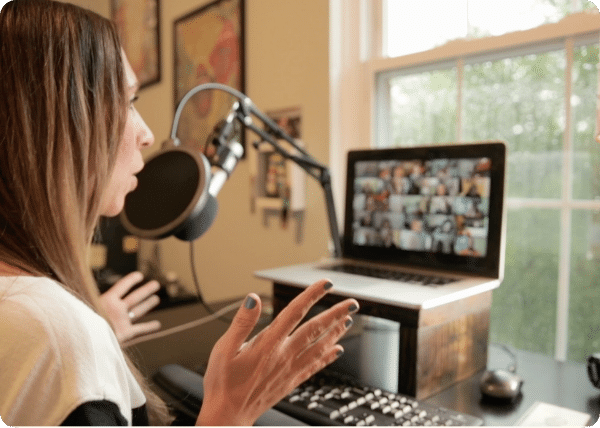
The Community is a group of like-minded people exploring big questions while getting personal coaching and support from Dr. Amy and her Change Coaches. It includes weekly group calls, access to our private forum, three ‘Resting in Restlessness’ calls each month, and more!
If you prefer a self-paced course:
Join The little School of Big Change
The Little School of Big Change is a self-study course designed to help you overcome anxiety and unwanted habits without needing to rely on willpower or self-discipline. If you are ready to finally break the cycle of short-term change, that never sticks, The Little School of Big Change Self-Study is the place for you.
If you want 1-on-1 support:
Get personal support with 1-on-1 Coaching
With 1-on-1 Change Coaching, you get personal support with anything you’re going through, including things like anxiety, habits, and relationships. It is also great for those who want to deeply explore identity, nonduality, and the nature of reality the way Dr. Amy discusses them in her podcast.
You can choose Change Coaching with Dr. Amy herself (limited availability) or with one of her Certified Change Coaches.
If you’d like to get support in a group:
The Community Membership
The Community is a group of like-minded people exploring big questions while getting personal coaching and support from Dr. Amy and her Change Coaches. It includes weekly group calls, access to our private forum, three ‘Resting in Restlessness’ calls each month, and more!
Not sure where to start?
*US/Canada only